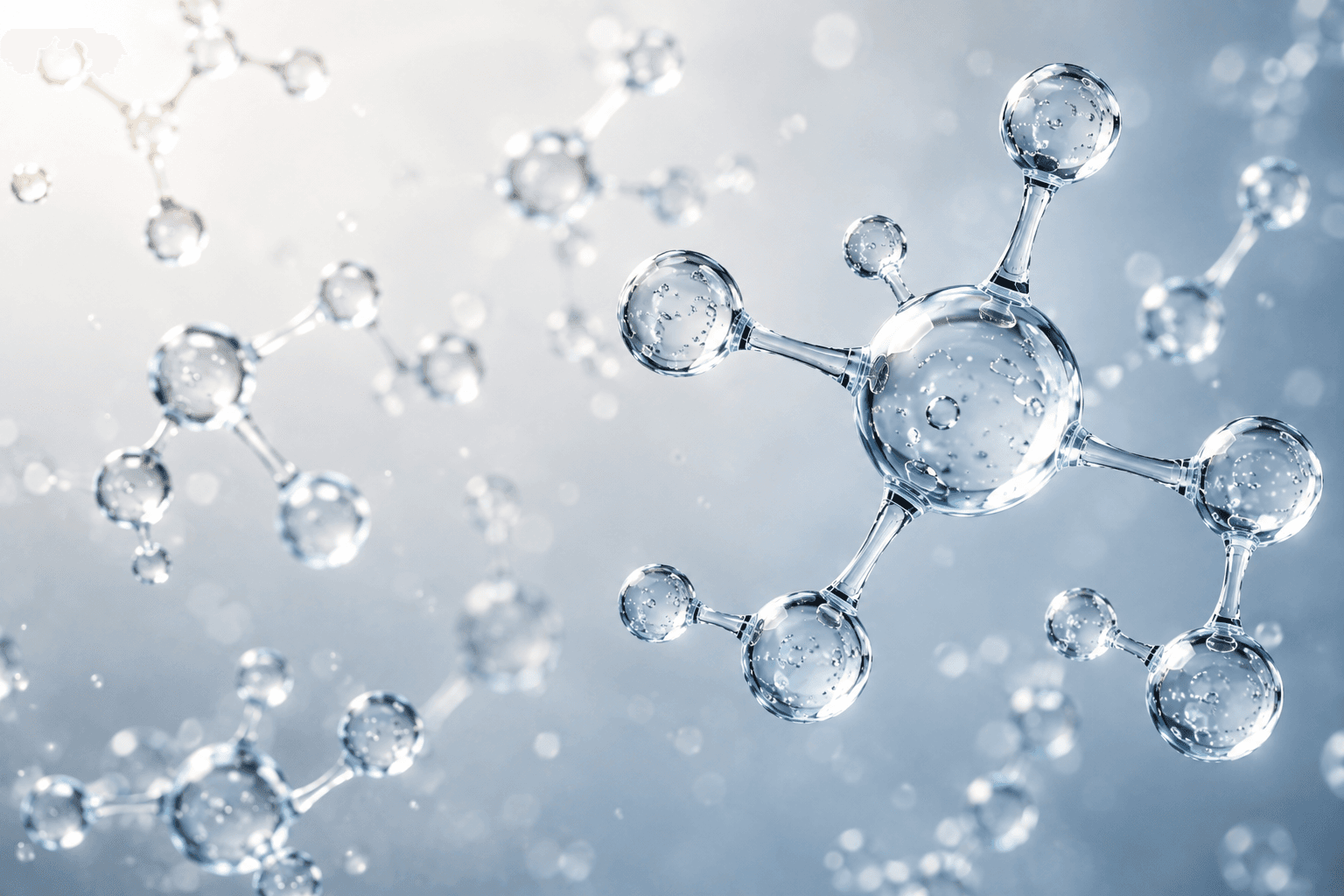
THE CHLOROPHYLLIN
Chlorophyll water became a trend. Trends fade. The molecule underneath (chlorophyllin) has been studied in laboratories, clinics and human trials for over eighty years. This page is a comprehensive evidence dossier — what we know, what we don't, and what we're watching next.
01
Understand the molecule before building the product.
02
Let research and data guide every formulation.
03
Every ingredient earns its place for a reason.
Chlorophyllin — A natural green pigment derived from plants
Water-soluble derivative of natural chlorophyll
Chlorophyll porphyrin ring; magnesium replaced with copper
Permitted by the US FDA as an OTC internal deodorant; listed food colourant exempt from certification; FSSAI-compliant nutraceutical in India
95-100% purity — independent third-party assay · lab tested · every batch
Chlorophyllin — A natural green pigment derived from plants
Water-soluble derivative of natural chlorophyll
Chlorophyll porphyrin ring; magnesium replaced with copper
Permitted by the US FDA as an OTC internal deodorant; listed food colourant exempt from certification; FSSAI-compliant nutraceutical in India
95-100% purity — independent third-party assay · lab tested · every batch
From clinical wound preparations in the 1940s to landmark PNAS human trials and current Phase 3 research.
Chlorophyllin enters medicine: wound-healing preparations and internal deodorization for colostomy and ileostomy patients. Chlorophyllin-based wound ointments remain available by prescription in the US today.
A randomized, double-blind, placebo-controlled trial in Qidong, China: 180 adults, 300 mg chlorophyllin daily with meals, four months. Result: a 55% reduction in aflatoxin–DNA adducts — a biomarker of carcinogen damage — versus placebo. Published in PNAS. Johns Hopkins researchers name the mechanism: an "interceptor molecule" that binds dietary carcinogens in the gut.
Human crossover pharmacokinetic research confirms chlorophyllin taken with food impedes aflatoxin absorption and reduces systemic exposure.
While conventional wellness products rely on crude plant colorants and unstandardized green blends, Ownmor pioneers Biophyll™. Developed through extensive extraction trials and strategic harvesting protocols, it delivers pharmaceutical-grade, 95-100% pure Chlorophyllin — a bioactive green pigment engineered for maximum cellular bioavailability and gut interception.
A Phase 3 randomized trial (NCT07164534) at Tata Memorial Hospital is evaluating oral chlorophyllin, an NRF2-pathway activator, against late radiotherapy toxicity in cervical cancer.
Ownmor is launching Next-Generation Biophyll™ — advancing molecular bioavailability, refined delivery systems, and next-tier cellular vitality formulations.
Independent, investigator-initiated research — not sponsored by Ownmor. We cite it because the world should know this molecule is being taken seriously.
Chlorophyllin forms molecular complexes with certain dietary mutagens (aflatoxins, heterocyclic amines) in the digestive tract, reducing their absorption. Demonstrated in randomized human trials.
Decades of clinical use; permitted by the US FDA as an OTC internal deodorant at up to 300 mg/day. Documented by the Linus Pauling Institute, Oregon State University.
Demonstrated in laboratory studies, including protection of cell membranes against oxidative damage (Kamat et al., Biochimica et Biophysica Acta). Cellular defence
Real Citations · Verify Every Claim
Egner PA et al. · PNAS, 2001 — Human RCT; the landmark.
Jubert C et al. · Cancer Prevention Research, 2009 — Human crossover.
Kamat JP et al. · Biochim Biophys Acta — Laboratory.
Linus Pauling Institute · Oregon State University — Definitive public monograph.
ClinicalTrials.gov NCT07164534 · Tata Memorial Hospital — Phase 3, recruiting.
Narrative review, 2025 — Review.
Science advances on clarity, not hyperbole. Here is exactly where our molecule begins — and where our claims end.

Biophyll™ is a dietary supplement. We do not make any medical claims. We track early-stage research on chlorophyllin, fund our own quality checks, and always publish the truth about what works and what is still unproven.
One more reason standardization matters: crude, unstandardized chlorophyll products can contain photosensitizing breakdown compounds. Biophyll is defined by what it is — 95-100% pure chlorophyllin — and by what it is not.